

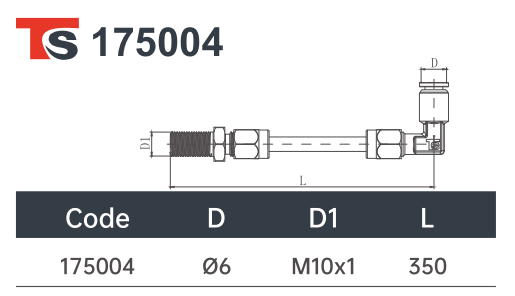
What Is Industrial flexible Hose
Why Industrial Flexible hose Is Important in Modern Systems
Core Functions of Industrial Flexible Hose
Common Media Handled by Industrial Flexible Hose
Main Types of Industrial Flexible Hose
Industrial Flexible Hose by Construction Style
Industrial Flexible Hose by Material
Industrial Flexible Hose by End Connection
Industrial Flexible Hose by Pressure Class
Industrial Flexible Hose by Temperature Range
1. What Is Industrial Flexible Hose
An Industrial Flexible Hose is a flexible conduit designed to transfer fluids or gases between two points while accommodating movement, vibration, thermal expansion, alignment variation, or installation constraints. Unlike rigid pipe systems, an industrial flexible hose can bend, flex, and absorb stress, making it ideal for dynamic and space limited applications.
An industrial flexible hose may be used to transfer:
Water
Hot water
Compressed air
Steam
Hydraulic fluid
Lubricants
Fuel
Oil
Gas
Chemicals
Slurries
Food grade liquids
Cleaning media
The term industrial flexible hose generally refers to a heavy duty hose assembly used in commercial or industrial environments, often combined with fittings, couplings, ferrules, braiding, or protective covers.
2. Why Industrial Flexible Hose Is Important in Modern Systems
In industrial engineering, rigid piping is not always practical. Machines vibrate. Pumps start and stop. Temperature changes cause expansion and contraction. Equipment may shift slightly during operation. Maintenance may require quick disconnection. Tight spaces may make rigid routing difficult.
This is where Industrial Flexible Hose becomes essential.
A properly selected industrial flexible hose can:
Reduce mechanical stress on equipment
Improve installation efficiency
Simplify routing in compact layouts
Absorb vibration and pulsation
Compensate for thermal movement
Reduce noise transmission
Improve serviceability
Support faster replacement and maintenance
Protect connections from misalignment damage
Because of these benefits, industrial flexible hose is widely used across factories, utility plants, building services, processing lines, and machinery systems.
3. Core Functions of Industrial Flexible Hose
The main purpose of an industrial flexible hose is not only fluid transfer, but also system protection and adaptability.
Fluid conveyance: moves liquids or gases from source to destination
Flexibility: allows routing around obstacles or in confined spaces
Vibration absorption: protects pumps, compressors, and machinery
Movement compensation: handles minor dynamic motion or equipment shift
Thermal expansion relief: reduces stress caused by temperature changes
Alignment tolerance: compensates for installation inaccuracies
Noise reduction: lowers transmission of vibration induced sound
Maintenance access: enables easier service or replacement
4. Common Media Handled by Industrial Flexible Hose
An industrial flexible hose can be designed for many different media types. Media compatibility is one of the most important selection criteria.
Clean water
Potable water
Hot water
Chilled water
Glycol mixtures
Compressed air
Vacuum
Steam condensate
Saturated steam
Hydraulic oil
Lubricating oil
Diesel or light fuel oil
Industrial gases
Refrigerants
Mild chemicals
Corrosive chemicals
Solvents
Cleaning agents
Food products
Beverage liquids
5. Main Types of Industrial Flexible Hose
There are many ways to classify an industrial flexible hose. Common categories include material, reinforcement, application, and end connection.
Rubber industrial hose
PVC industrial hose
PTFE lined flexible hose
Composite hose
Hydraulic hose
Steam hose
Air hose
Chemical transfer hose
Food grade hose
Water discharge hose
Suction hose
Corrugated metal hose
Non metallic reinforced hose
Each type of industrial flexible hose is optimized for specific pressure, temperature, and chemical compatibility conditions.
6. Industrial Flexible Hose by Construction Style
Construction style has a major impact on performance.
A flexible metal tube with corrugations that allow bending and movement.
Advantages:
High temperature resistance
Excellent pressure capability
Good corrosion resistance with suitable alloy
Suitable for steam, gas, and demanding industrial service
A hose with external braided reinforcement, often stainless steel or textile.
Advantages:
Higher pressure resistance
Improved burst strength
Better shape retention
Added protection from expansion
A hose with smooth internal surface for better flow and easier cleaning.
Advantages:
Lower pressure drop
Better sanitary performance
Less media retention
Improved cleanability
A multi layer construction using films, fabrics, and wire helices.
Advantages:
Lightweight
Good chemical resistance
Flexible in large diameters
Common in chemical and fuel transfer
A rubber hose with textile, wire, or spiral reinforcement.
Advantages:
Durable
Good abrasion resistance
Versatile
Cost effective for many services
7. Industrial Flexible Hose by Material
Material selection is critical because industrial flexible hose performance depends heavily on the hose wall and reinforcement material.
Stainless steel
Carbon steel (limited special use)
EPDM rubber
NBR rubber
Neoprene
Silicone
PVC
PU
PTFE
UHMWPE lined constructions
Composite laminates
Stainless steel braid
Galvanized steel wire
High tensile steel wire
Polyester textile braid
Synthetic fiber reinforcement
Helical wire support
8. Industrial Flexible Hose by End Connection
An industrial flexible hose can be supplied with many connection styles depending on system requirements.
Female threaded ends
Male threaded ends
BSP threaded fittings
NPT threaded fittings
Flanged ends
Tri clamp ends
Camlock couplings
Quick connect couplings
Compression fittings
Hose tail fittings
Union connections
Weld ends
Sanitary fittings
The correct fitting for an industrial flexible hose must match the pressure, temperature, media, and service conditions.
9. Industrial Flexible Hose by Pressure Class
Pressure rating is one of the most important performance factors.
Low pressure industrial flexible hose
Medium pressure industrial flexible hose
High pressure industrial flexible hose
Vacuum rated industrial flexible hose
Full vacuum industrial flexible hose
Pulsation resistant industrial flexible hose
Actual ratings vary based on:
Hose diameter
Material
Reinforcement type
Temperature
End fitting design
Safety factor
Media compatibility
10. Industrial Flexible Hose by Temperature Range
Temperature capability depends on both hose body material and fitting material.
Ambient service
Hot water service
Chilled water service
Steam service
High temperature gas service
Cryogenic or low temperature service
Chemical process temperature service
Temperature limits must always be verified because pressure ratings often decrease at higher temperatures.
Sed ut perspiciatis unde omnis iste
natus error sit voluptatem
accusantin doloremque
laudantium
info@tsarmatur.se


+46760057388
Copyright © 2023 Ts Armatur, All Rights Reserved
SitemapThis website uses cookies to ensure you get the best experience on our website.
 Svenska



 WhatsApp
 Phone